 With the formation of the Belize Ecotourism Association, this small nation has become a giant in ecotourism, pioneering travel with a commitment to ecological and cultural responsibility.
The national parks of Belize are among the most precious natural resources on the planet. The national parks are a paradise for scientists, and several research projects are in process at any given time. Here is a quick look at ecotourism highlights in Belize.
Chiguibul National Park
This broad tableland consists of hundreds of square miles of intact forest, the last stronghold of many wildlife and plant species that are endangered elsewhere in Central America and southern Mexico. The plateau is criss-crossed by old logging trails, many of which have now been reclaimed by the jungle.
Caracol Archaeological Reserve
Caracol Archaeological Reserve includes Caracol, the largest Mayan ruin in Belize. This ancient Mayan city was a massive and sophisticated metropolis that remained hidden from the world under a blanket of rain forest for nearly a thousand years. Caracol is surrounded by high-canopy forest, inhabited by several species of cats, monkeys, and rare birds.
Cockscomb Basin
The Cockscomb Basin Forest Reserve was established in 1984 and declared a no-hunting area to protect the natural prey of its resident jaguars. Cockscomb Basin is Belize's most famous reserve.
Blue Hole National Park
Blue Hole National Park includes some 575 acres covered with primary and secondary forest growth. From its northern boundary, the Hummingbird Highway, this rugged landscape quickly rises to elevations in excess of 700 feet. Much of this central area of Belize is ancient limestone. It includes such features as underground streams, rivers, sinkholes, cenotes, and extensive subterranean cave systems, which are the principle attractions at this national park.
Tapir Mountain
Tapir Mountain Nature Reserve was officially established in November 1986 for tropical research and preservation of genetic diversity. The area is 360 feet above sea level and covers 6,741 acres. Located at the northern edge of the Mountain Pine Ridge, the terrain is rugged limestone with subtropical wet forests.
Guanacaste National Park
Guanacaste National Park is the name of a 50-acre parcel of tropical forest located on the north side of the Western Highway just to the east of the Roaring Creek bridge. The land was first held as a British Crown Reserve, then became a park. Later it received the completely protected status of a national park to be cared for by the Belize Audubon Society. The park derives its name from the giant guanacaste trees growing near the southwestern edge. Many other species of trees grow here, as well. More than 100 species of birds have been identified in the park, as well as dozens of species of mammals and reptiles.
Rio Bravo
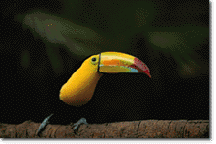
The Rio Bravo Conservation and Management Area, 229,000 acres of reserved land in the northwestern corner of Belize, is a reserve that provides varied rich habitats for many endangered and exotic species including the tapir, jaguar, toucan, hictee, Morelet's crocodile, and many others.
For more information about Belize, contact your travel professionals at Carlson Wagonlit Travel.